
choosing and planning your responses
This is Part 8 of my 10-part series to introduce the Intelligent Communication approach to effective communication. If this is your first lesson, I recommend you start with lesson 1 and work your way through the lessons in order, completing all the practical exercises. You can find lesson 1 at this link.
We have arrived at the last part of the Heart. By this time, I trust that you have become a better listener, because you realize the benefits of listening. Further, you should be achieving a greater understanding of communication–both of the message and the messenger. If you are not yet noticing improvements in these areas, I would suggest that you take some time to review the last three lessons and the practical exercises. It is okay if it takes you a little more time to implement these new processes. For some people, it is a little harder. I assure you that the benefits are worth the effort.
The Will
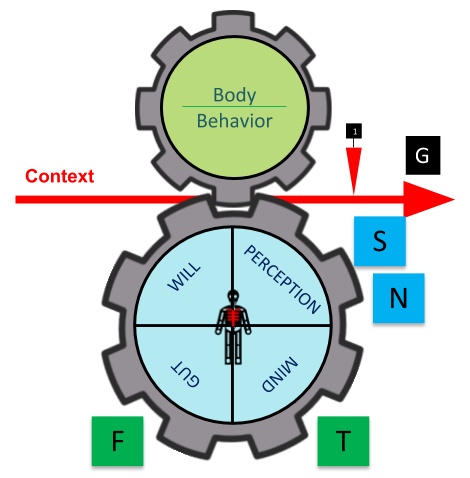
What is the Will? The Will functions as the culmination of all the parts and processes in the heart. The American theologian/philosopher Jonathan Edwards defined the will as “the mind choosing.” Edwards was using “mind” in a similar way as we are using “heart.” As we use our wills, we decide on what to do in response to the information we have perceived and considered with our minds and our gut.
The Intersection All Parts
The will is also where the inner person (the heart) with the outer person (behavior). Further, it connects these two parts at the Guideline. So, the will brings the whole model together. We use the information we have developed through perceiving, thinking, and feeling to determine what we will say and do (behavior) in response. This is how we move interactions with others in the direction of our interim objectives and ultimately our goal. Using our wills properly is what makes our communication deliberate and focused on achieving our goals
Planning
The will answers the question, “Now what?” We have gone through a great deal of effort to achieve full understanding. What do we do with this understanding? The possible answers to that question are many. We can choose to say or do whatever we want. But to be an Intelligent Communicator, we allow the IC 3.0 model to guide our decision making process.
There are two concepts involved in allowing the IC 3.0 model to guide our communication. Each of these is drawn from a component of the model that we have covered already: the Guideline and the Heart.
- The Guideline: Our planned response should contribute to achieving our goal or one of our interim objectives.
- The Heart: Our planned response should be based on our understanding of the other person and his/her messages.
Practical Exercise
This is a short lesson in regard to the new information provided. The implementation of the will is similar to implementing the other three parts of the Heart. For this practical exercise, we will do something similar to what we did for the lesson on the Mind. There will be two parts to this practical exercise.
The first part involves practical review and observation. Replay in your mind some of your past interactions. Analyze whether your responses met the two important concepts above: (1) Did they contribute to achieving your goal (assuming you have set a goal)? (2) Were your responses based on really understanding the other person and his/her message? If you cannot recall a previous interaction in enough detail to complete this exercise, I recommend you watch some interviews on TV or online. Observe whether the interviewer is following the two key concepts of using the will. Were the interviewers that seemed to follow the concepts more effective?
Once you have completed the first part of the practical exercise, you are ready to apply this knowledge to your own communication. This is the second part of the practical exercise. Start using your will deliberately in your interactions with others. This may force you to slow down a little. Do not let this concern you. Taking a little more time working through all parts of the heart will not hurt the flow of your interaction.
So, get started on your practical exercises. I will give you a week before moving to the next lesson.
Be quick to hear and slow to speak,
rjm
Discover more from Intelligent Communication
Subscribe to get the latest posts sent to your email.
 Intelligent Communication