
Listening to Understand
This is Part 5 of the Introduction to Intelligent Communication series of blog articles. If you have not yet completed the first four lessons, I suggest you do that before continuing with this lesson. You can find links to the previous lessons at the bottom of this post.
Now it is really getting interesting. That’s how I think each time I teach this model. I hope you are feeling the same way. This is the 5th lesson in this course. With this lesson, we begin our consideration of the four parts of the Heart.
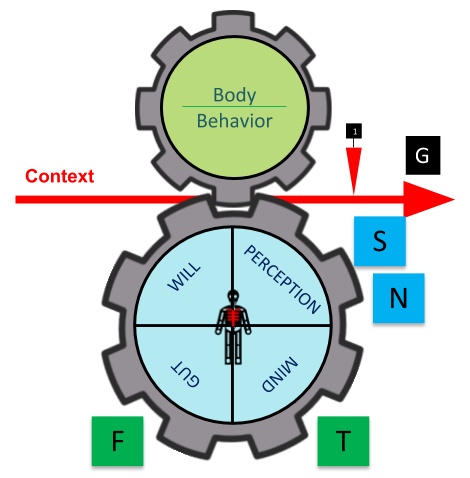
If you did the practical exercise from the last lesson, you should be quite ready to begin these next four lessons. They will answer the question, “How would I gain the understanding of the other person and his/her message I need to achieve my interim objectives and ultimately my goal?
Listen — Really Listen
Let’s begin with the first part: Perception. This step seems simple enough. We just have to listen. You are right, it is a simple thing, but it also seems to be very difficult to apply. Why do I say this? Because people tend to be poor listeners. We tend to forget half of what we hear right after hearing it and that increases to 75% by the following day. We really need to listen better.
In IC 3.0, when we mention listen (using our Perception), we include taking in information from all five senses, not just hearing. We need to attend to what the other person is sending us verbally and non-verbally. Remember, the motivation to do this is the idea that the other person is going to tell us what we need to know to achieve our goals.
Active Listening
The type of listening we are talking about in this step is what some people refer to as active listening. The concept of active listening was developed about four decades ago. The active listening process involves much more than what I am suggesting in this step. Actually, active listening is very similar to all the processes we use in our hearts.
What is active listening? It is “a multistep process, including making empathetic comments, asking appropriate questions, and paraphrasing and summarizing for the purposes of verification” (McNaughton, Hamlin, McCarthy, Head-Reeves, & Scheiner, 2008)
Do you notice anything strange about the definition of active listening? Read it again carefully. Where’s the listening? It seems to focus on talking and not listening at all.
Real Listening is Active Listening
If we are really listening to others, we are active in the process. Again, this whole Intelligent Communication approach takes effort. The effort will pay off in the end, but we must put forth the effort.
And that effort begins with listening. If we are not carefully attending to the messages being sent by the other person verbally and non-verbally, the remaining steps are just about useless. Listening provides the raw information we are going to process in the remaining steps. Like in the intelligence business, listening provides the raw information that we are going to process into intelligence for ourselves. This intelligence is going to guide what we say and do; leading to achieving our goal.
So, we really need to listen.
Listen to Understand
We need to listen to understand and not simply listen to respond. Too often most of us are doing the later.
When I present this course in my seminars, I ask my students to recall the first time they conducted an interview or led a meeting. I particularly suggest an interview or a meeting that was important and one for which they took some time to prepare. I then ask them the following question: “What were you thinking about right after you asked your first question or made your first comment?” The most common response to that question is, “my next question or comment.”
That is a perfect example of one of the problems we are seeking to overcome with IC 3.0. We are so focused on the response, we do not really listen to the other person’s message. We are missing out on the very information we need to move the conversation towards our goal. So, let’s commit now to change our paradigm from “listen to respond” to “listen to understand.”
Practical Exercise
It probably comes to no surprise that our practical exercise for this lesson will be to listen. I want you to practice listening. But not just any listening, I want you to practice listening to understand. Take the next week to practice this. Pick a conversation and tell yourself that you are going to really focus on listening and not be too worried about what you say/do in response. Then, just listen…and engage all five senses in the process. See how much more information you gain in the process.
Good listening is not natural for most of us. It is a learned skill. So take some time to practice listening over the next seven days. And let me know how it goes. Leave a comment and tell me about your experience.
I have a few additional practical exercises I use during my live training courses. I am planning on incorporating them into the expanded version of this course that I am building for my online training center. If you subscribe to my blog, I’ll be sure to keep you up-to-date on those developments. For now, get out there and practice.
Be quick to hear and slow to speak,
rjm
- Introduction to Intelligent Communication–Part 1
- Introduction to Intelligent Communication–Part 2
- Introduction to Intelligent Communication–Part 3
- Introduction to Intelligent Communication–Part 4
Discover more from Intelligent Communication
Subscribe to get the latest posts sent to your email.
 Intelligent Communication