
Produce Intelligence for Yourself
This is the fourth lesson in this series, providing an introduction to the Intelligent Communication approach to effective communication. If you haven’t yet completed the first three parts, do that before completing this lesson. You can find links to the previous lessons at the bottom of this article.
Welcome to the second part of this blog series on Intelligent Communication 3.0 (IC 3.0). I hope it has been a very busy and productive week for you, integrating the Guideline into your own communication. I know it is hard work right now. I assure you it gets easier as you make all the parts of Intelligent Communication a habit. If you did take the time to begin using the Guideline in your own communication, I hope you left a comment letting me know how it went. If not, think about doing that now.
In this lesson, we will begin the first of five lessons on the Heart. This aspect of IC 3.0 is so important, I wanted to do a lesson on each part of the Heart. As with previous lessons, I will ask you to begin using each step immediately. This is important. If we do not begin using what we learn soon after learning it, we will likely forget what we learned. Let’s not waste the opportunities we have to become better communicators.
The Inner Person — the Heart
The Heart component of IC 3.0 is the part that is really going to make you a better communicator. This is the aspect of communication that is missing for most people. Effectively engaging all the four parts of the heart is going to give you a decided advantage over the people with whom you communicate. So, I want you to make sure you dedicate yourself to learning and practicing the information in these five lessons. Let’s go.
When I speak of the Heart, I am referring to all that makes up our inner person. You might refer to it as your soul. The model I use is based on an ancient view of anthropology that I find both simple and effective. I’m not saying this is the definitive way of classifying the human psyche, but it is a way that you can use to make your communication and relationships more effective. In IC 3.0, the Heart consists of four parts that function similarly to the four steps in the original Intelligent Communication and Smart Talk models. If you want to review that, you can watch the video again in lesson 1. See the graphic below for the four parts of the heart.
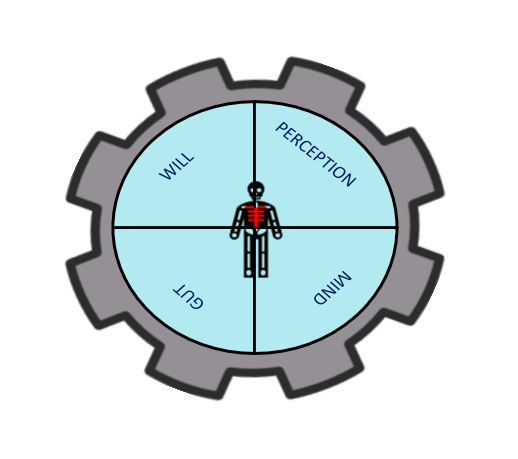
Four Parts
These are the four parts of the heart:
- The Perception (Seeing, Hearing, and all the senses)
- The Mind (Thinking)
- The Gut (Feeling)
- The Will (Deciding and Planning)
If we want to fully understand what others are communicating to us, we must use all these parts continuously. Why do we seek greater understanding? Well, my many years as an intelligence officer taught me that people will often give you the information you need to achieve your goals through good communication skills. You simply need to understand what they say and respond with the right techniques to move the conversation towards your objectives and your ultimate goal.
Now, this process may seem somewhat mechanical and not something you can do “on the fly” in a conversation. But, you can do this. I do this and so do hundreds of students I have taught. As you practice it, it becomes automatic. You are no longer doing it consciously. You just do it. But this takes practice. This is why I include practical exercises at the end of each lesson and give you time to practice them before sending you the next lesson.
Practical Exercise
This is a short lesson, as I will be using the next four lessons to go over the Heart in greater detail. I will cover one part in each lesson. But that does not mean that you do not have some homework to do now. In this practical exercise, I want to connect what we are about to learn (the Heart) with what we have already learned (the Guideline). This will also prepare you to learn the four parts of the Heart in a practical context.
Go back to the practical exercise from the last lesson on the Guideline. Think about those interactions you prepared for using the Guideline. Consider the goal you set and the interim objectives you identified to help you achieve your goal. Now, think about the information you would want to understand concerning the other person and the situation to help you achieve your goal and interim objectives. Ask yourself, “how would I gain this understanding?” Actually, the next four lessons will help you answer that question, but it is good to start thinking about it now.
Now find the time to work through this practical exercise. The next lesson will be posted next week. We will discuss Perception; the first part of the Heart.
Be quick to hear and slow to speak,
rjm
- Introduction to Intelligent Communication–Lesson 1
- Introduction to Intelligent Communication–Lesson 2
- Introduction to Intelligent Communication–Lesson 3
Discover more from Intelligent Communication
Subscribe to get the latest posts sent to your email.
 Intelligent Communication
One thought on “Introduction to Intelligent Communication–Part 4”